
Rob Reiner is one of Hollywood’s most recognizable filmmakers, actors, producers, and storytellers, celebrated for his ability to create movies that combine humor, emotion, memorable characters, and timeless storytelling. From iconic comedy films to romantic classics and powerful dramas, Reiner has built a remarkable career spanning several decades.
Best known for directing movies such as When Harry Met Sally…, The Princess Bride, Stand by Me, This Is Spinal Tap, and A Few Good Men, he has demonstrated an extraordinary ability to work across different genres while maintaining a distinctive storytelling style. His contributions to television and cinema have made him an influential figure in American entertainment.
This article explores Rob Reiner’s life, career, most famous movies, directing style, achievements, and lasting influence on the film industry.
1. Early Life and Family Background
Rob Reiner was born on March 6, 1947, in the Bronx, New York City, into a family deeply connected to the entertainment industry. His father, Carl Reiner, was a celebrated comedian, actor, writer, and director, while his mother, Estelle Reiner, was also involved in entertainment. Growing up in such a creative environment exposed Rob to comedy, performance, television, and filmmaking from an early age.
Despite having a famous father, Rob Reiner gradually established his own identity in Hollywood. Rather than relying solely on his family background, he developed his own skills as an actor, writer, and director, eventually becoming a respected filmmaker in his own right.
He attended the University of California, Los Angeles (UCLA), where he studied theater and explored his interest in acting and performance. His early experiences helped him understand the importance of dialogue, character development, timing, and audience engagement.
These foundations later became essential elements of his directing career. Reiner’s ability to understand actors and recognize the emotional requirements of a scene contributed significantly to his success behind the camera.
2. Rob Reiner’s Early Career in Television
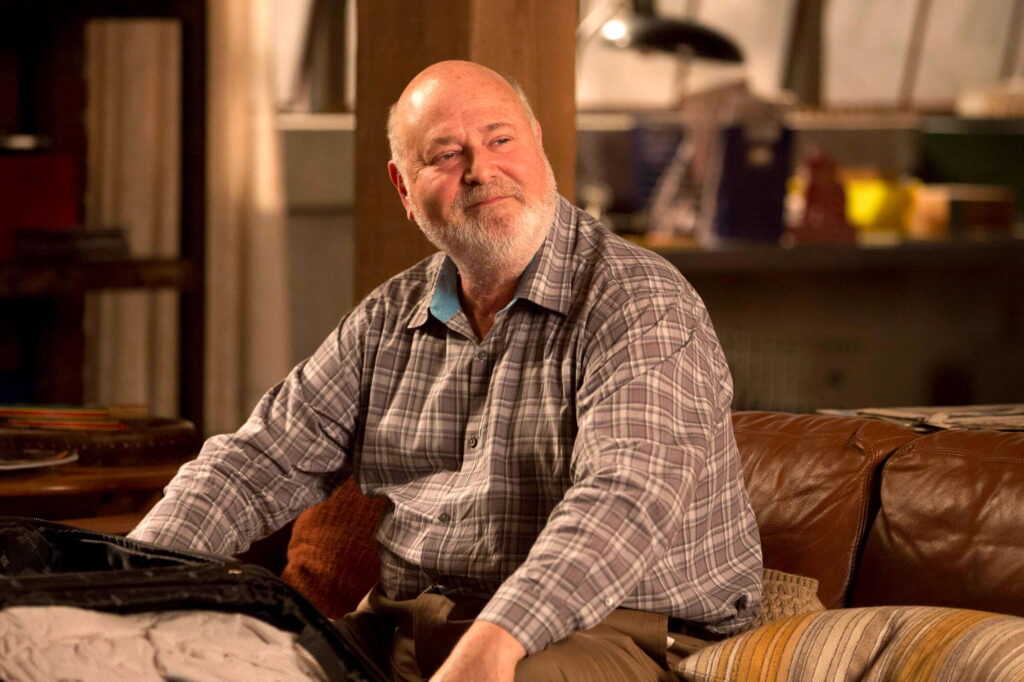
Before becoming a successful film director, Rob Reiner gained widespread recognition as a television actor. His breakthrough came in 1971 when he joined the cast of the influential sitcom All in the Family.
He portrayed Michael “Meathead” Stivic, the son-in-law of Archie Bunker, played by Carroll O’Connor. The sitcom explored political disagreements, generational differences, social issues, family relationships, and cultural changes in American society.
Reiner’s character represented a younger, liberal perspective that frequently challenged Archie’s conservative opinions. The contrast between the two characters created some of the show’s most memorable conversations and comedic situations.
His performance earned him two Primetime Emmy Awards, establishing him as a talented television actor. The success of All in the Family gave him national recognition and helped him build valuable connections within the entertainment industry.
Although acting made him famous, Reiner was increasingly interested in filmmaking. He wanted to explore stories from behind the camera, leading him to transition from television performance to movie directing.
3. Rob Reiner’s Breakthrough as a Film Director
Rob Reiner made his feature directorial debut with This Is Spinal Tap in 1984. The film followed a fictional British heavy metal band struggling with its music career, performances, personalities, and increasingly absurd situations.
The movie used a mockumentary format, presenting fictional events as if they were part of a real documentary. Its humor came from exaggerated personalities, awkward interviews, ridiculous situations, and the entertainment industry’s obsession with fame.
This Is Spinal Tap became a cult classic and demonstrated Reiner’s ability to create comedy through natural performances and realistic presentation. It also introduced audiences to his distinctive approach to directing, which often allowed actors to develop believable characters while delivering entertaining scenes.
The film’s success opened the door for more ambitious projects. Reiner quickly proved that he was not limited to comedy and could explore different storytelling styles, emotional themes, and cinematic genres.
His directorial career subsequently became one of the most impressive runs of filmmaking during the 1980s and early 1990s.
4. Rob Reiner’s Most Famous Movies
Rob Reiner directed several films that became important parts of American popular culture. His ability to move between comedy, romance, suspense, adventure, and drama helped distinguish him from many filmmakers who specialized in a single genre.
Stand by Me (1986)
Stand by Me is one of Reiner’s most beloved films. Based on Stephen King’s novella The Body, the coming-of-age drama follows four young boys who embark on a journey to find the body of a missing teenager.
The story explores friendship, childhood innocence, fear, personal growth, and the transition toward adulthood. The film’s emotional depth and authentic portrayal of young friendship made it a timeless classic.
The Princess Bride (1987)
The Princess Bride is a fantasy adventure combining romance, comedy, sword fighting, and memorable characters. Its story follows Westley and Buttercup through a world filled with danger, adventure, humor, and unexpected twists.
The film became particularly popular because of its quotable dialogue, charming characters, and ability to entertain audiences of different ages. It remains one of the most recognizable fantasy films of its era.
When Harry Met Sally… (1989)
One of Rob Reiner’s most successful romantic comedies, When Harry Met Sally… explores whether men and women can maintain a friendship without romantic attraction becoming involved.
Featuring Billy Crystal and Meg Ryan, the film follows the relationship between Harry and Sally over several years as they navigate friendship, dating, relationships, and emotional uncertainty.
The movie is widely regarded as one of the defining romantic comedies of modern cinema. Its witty dialogue, relatable characters, and realistic relationship dynamics helped establish a formula that influenced many romantic films that followed.
Misery (1990)
Reiner demonstrated his ability to create suspense and psychological tension with Misery, an adaptation of Stephen King’s novel.
The film stars James Caan as a successful novelist who becomes trapped in the home of an obsessive fan, portrayed by Kathy Bates. As the situation becomes increasingly dangerous, the story develops into a tense psychological thriller.
Kathy Bates delivered an outstanding performance that earned her the Academy Award for Best Actress. The film proved that Reiner could successfully direct darker and more intense stories without losing his ability to control pacing and character development.
A Few Good Men (1992)
A Few Good Men is one of Reiner’s most acclaimed courtroom dramas. The film follows military lawyers investigating the circumstances surrounding the death of a Marine at a military base.
Featuring Tom Cruise, Jack Nicholson, Demi Moore, and Kevin Bacon, the movie explores military authority, justice, responsibility, loyalty, and the ethical challenges of following orders.
Its courtroom scenes, powerful dialogue, and dramatic confrontations made it a memorable film. It received multiple Academy Award nominations, including Best Picture, further strengthening Reiner’s reputation as a versatile filmmaker.
The American President (1995)
The American President combines political drama with romance. The film follows a widowed American president who develops a relationship with a lobbyist while dealing with political pressure, public scrutiny, and the responsibilities of leadership.
Starring Michael Douglas and Annette Bening, the movie balances emotional storytelling with political themes. Its thoughtful dialogue and portrayal of leadership helped it become a notable entry in Reiner’s filmography.
5. Rob Reiner’s Directing Style and Storytelling Approach

Rob Reiner’s directing style was defined by his ability to prioritize characters, dialogue, emotional authenticity, and storytelling clarity. Rather than relying exclusively on visual spectacle, he often built his movies around relatable situations and strong performances.
His movies often featured:
- Strong character development: Characters feel recognizable, imperfect, and emotionally believable.
- Natural dialogue: Conversations often sound spontaneous rather than overly scripted.
- Genre versatility: He worked successfully in comedy, romance, fantasy, drama, and thriller.
- Emotional storytelling: His films frequently explore friendship, love, family, personal growth, and moral dilemmas.
- Memorable scenes: Reiner understood how to build moments that audiences would remember long after watching a movie.
His approach made his films accessible to broad audiences without sacrificing storytelling quality. Whether he was creating a comedy or a serious drama, his focus remained on making the characters and their experiences meaningful.
6. Castle Rock Entertainment and His Contribution to Hollywood
In 1987, Rob Reiner co-founded Castle Rock Entertainment, a production company that became an important part of his professional career. The company helped produce numerous films and television projects, expanding Reiner’s influence beyond directing individual movies.
Castle Rock became associated with quality entertainment and was involved in producing several notable projects. Its influence extended beyond cinema into television, including the acclaimed sitcom Seinfeld.
Establishing a production company gave Reiner greater creative opportunities and helped him participate in filmmaking at multiple levels. He could develop projects, collaborate with writers and producers, and support productions that reflected a wide range of storytelling interests.
His work as a producer demonstrates that his contribution to Hollywood was not limited to directing or acting. He also helped shape the entertainment industry through production, development, and creative collaboration.
7. Awards, Recognition, and Career Achievements
Rob Reiner received significant recognition throughout his career for his contributions to television and cinema. His achievements reflected his versatility as a performer, director, producer, and storyteller.
Some of his notable accomplishments include:
- Winning two Primetime Emmy Awards for his performance in All in the Family.
- Receiving an Academy Award nomination for Best Picture for A Few Good Men as a producer.
- Earning nominations from the Directors Guild of America for his work on major films.
- Receiving recognition for his contributions to American cinema.
- Being honored with a star on the Hollywood Walk of Fame in 1999.
- Receiving the Chaplin Gala Tribute at Film at Lincoln Center in 2014.
His career achievements demonstrate the lasting impact of his work across different areas of entertainment. Although not every film received the same level of critical or commercial success, his strongest movies continue to attract audiences and remain relevant to film enthusiasts.
Reiner’s ability to deliver memorable movies across multiple genres is one of the most significant achievements of his career.
8. Rob Reiner’s Political Activism and Social Contributions
Beyond filmmaking, Rob Reiner was known for his political involvement and advocacy for social issues. He frequently used his public platform to express opinions about democracy, civil rights, education, equality, and political developments in the United States.
One of his notable areas of involvement was early childhood education. Reiner supported initiatives aimed at improving access to early childhood programs and helping children receive better educational opportunities during their formative years. He was involved in California’s First 5 initiative, which focused on supporting young children and families.
He also became an advocate for marriage equality and supported efforts to advance legal recognition of same-sex marriage. His activism demonstrated that he viewed public influence as an opportunity to contribute to broader social discussions.
While his political views sometimes attracted criticism and debate, his willingness to speak publicly about issues he considered important became another defining aspect of his life.
9. Rob Reiner’s Later Career and Continued Influence
Rob Reiner continued working in entertainment long after his most celebrated films of the 1980s and 1990s. His later career included directing, acting, producing documentaries, and participating in television projects.
He appeared in various television shows and films, often taking supporting roles that allowed him to remain connected with audiences. His later work also included documentary filmmaking, demonstrating his continuing interest in real-life stories and important cultural subjects.
Even decades after directing his early classics, Reiner remained a recognizable figure in Hollywood. His experience, creative background, and understanding of storytelling allowed him to work across different formats and generations of entertainment.
His continued involvement in the industry reflected a lifelong commitment to filmmaking rather than a career limited to a particular period of success.
10. Rob Reiner’s Legacy in American Cinem
Rob Reiner’s legacy is closely connected to the films that shaped audiences’ experiences of comedy, romance, adventure, suspense, and drama. His movies remain popular because they focus on universal emotions and situations that people can understand regardless of age or background.
Stand by Me continues to resonate with audiences who appreciate stories about friendship and growing up. The Princess Bride remains a favorite among fantasy lovers, while When Harry Met Sally… continues to influence discussions about relationships and romantic comedy storytelling.
Similarly, Misery and A Few Good Men demonstrate his ability to create tension, powerful performances, and memorable dramatic moments.
His career also offers an important lesson for aspiring filmmakers: success in cinema does not require mastering only one genre. Creativity, curiosity, collaboration, and an understanding of human emotions can help a director build a diverse and meaningful body of work.
Reiner’s influence extends beyond individual movies. He helped establish a filmmaking approach that placed strong emphasis on writing, acting, character development, and the emotional connection between a story and its audience.
Conclusion
Rob Reiner was a remarkable Hollywood filmmaker whose career combined acting, directing, producing, writing, and activism. From his breakthrough role in All in the Family to directing some of the most memorable movies of modern American cinema, he demonstrated extraordinary versatility and creativity.
His films continue to entertain, inspire, and connect with audiences through their memorable characters, meaningful dialogue, and emotional storytelling. Whether creating a romantic comedy, a coming-of-age drama, a fantasy adventure, or a courtroom thriller, Reiner consistently demonstrated a strong understanding of what makes a story engaging.
For film lovers, aspiring directors, and anyone interested in Hollywood history, Rob Reiner’s career remains an important example of how creativity, storytelling, and dedication can leave a lasting mark on the entertainment industry. His movies continue to be watched, discussed, and appreciated, securing his place among the influential filmmakers in American cinema.

I am Muhammad Jawad Iqbal (Founder & Admin of HacksNoon) from Lahore, Pakistan. HacksNoon is a technology blog covering AI, software, digital trends, and practical tech tutorials. I enjoy making technology easier to understand through useful, informative content.
Contact: info@hacksnoon.com