
Recovery after an illness, injury, or surgery can be a challenging process. For many Australians, progress depends on access to the right healthcare professionals, consistent rehabilitation, and tools that support everyday activities. As healthcare continues to evolve, technology is playing an increasingly important role in helping people regain mobility, improve independence, and participate more actively in their recovery.
Australian allied health recovery technology brings together rehabilitation equipment, digital health platforms, remote consultations, and innovative treatment tools that support allied health professionals and their patients. These technologies can help make care more accessible, improve communication between healthcare providers, and provide additional ways to monitor progress throughout rehabilitation.
Across Australia, allied health professionals work in areas such as physiotherapy, occupational therapy, psychology, speech pathology, and exercise physiology. Their services support people recovering from injuries, managing chronic conditions, and adapting to changes in physical or cognitive function.
This article explores the role of recovery technology in Australian allied health, the tools transforming rehabilitation, and the opportunities and challenges associated with introducing digital solutions into patient care.
What Is Australian Allied Health Recovery Technology?
Australian allied health recovery technology refers to the equipment, digital systems, and technology-assisted approaches used to support rehabilitation and recovery within Australia’s healthcare sector.
Allied health professionals provide specialised services that complement medical care. Depending on a person’s needs, these services may involve improving movement, restoring daily living skills, supporting communication, managing nutrition, or addressing psychological challenges.
Recovery technology can assist with these activities in different ways. Some solutions involve physical equipment used during supervised therapy, while others enable patients to participate in rehabilitation at home or allow practitioners to monitor progress remotely.
Examples include:
- Digital rehabilitation programs and remote therapy platforms.
- Motion sensors and wearable devices that track movement or physical activity.
- Robotic systems that assist with repetitive rehabilitation exercises.
- Virtual reality applications designed for therapeutic activities.
- Assistive technology that supports mobility, communication, and independent living.
- Electronic health systems that help healthcare professionals share relevant patient information.
The purpose is not simply to introduce more technology into healthcare. It is to select tools that address genuine patient needs and complement the professional knowledge of qualified practitioners.
Why Is Recovery Technology Important in Australia?
Australia’s healthcare system serves people living in major cities, regional communities, rural towns, and remote areas. Access to specialised rehabilitation can vary depending on location, workforce availability, transport, and the type of service required.
The Australian Government identifies workforce shortages and the uneven distribution of some allied health professions as important challenges, particularly for rural and remote communities.
Technology can help address some of these barriers by making certain services available outside traditional clinical settings.
Improving Access to Rehabilitation
Remote consultations and digital rehabilitation programs can allow patients to connect with allied health professionals without travelling to a clinic for every appointment.
This can be particularly helpful for people who have mobility limitations, live far from specialist services, or find frequent travel difficult because of work and family responsibilities.
Telehealth does not replace every form of hands-on treatment. However, when appropriate for the patient’s condition, it can provide a convenient way to receive guidance, review progress, and maintain contact with a rehabilitation team.
Research into telehealth delivery of allied health interventions has identified potential benefits in access to care, particularly for people who experience geographical or mobility-related barriers.
Supporting More Personalised Care
Recovery is different for every person. Two patients with similar injuries may have different physical abilities, personal goals, and rehabilitation requirements.
Digital assessment tools and movement-tracking systems can provide additional information to help practitioners understand how a patient is progressing. When combined with clinical assessments and patient feedback, this information may support adjustments to an individual treatment plan.
For example, a physiotherapist working with someone recovering from a knee injury may use recorded exercise performance and functional assessments to help evaluate progress. The technology supports the assessment, while the practitioner remains responsible for interpreting the information and deciding what changes are appropriate.
Encouraging Patient Participation
Rehabilitation often requires consistent effort outside scheduled appointments. Patients may need to complete prescribed exercises, practise everyday activities, or follow strategies recommended by their healthcare team.
Digital reminders, exercise demonstrations, and progress dashboards can help people understand their rehabilitation plans and maintain a regular routine.
These tools are most useful when they are simple to operate, suited to the patient’s abilities, and supported by clear professional guidance.
Key Technologies Used in Allied Health Recovery
Recovery technology includes several categories of tools, each serving a different purpose. The most suitable option depends on the patient’s condition, the treatment goals, and the clinical setting.
1. Digital Rehabilitation and Telehealth
Digital rehabilitation allows selected therapeutic activities to be delivered through video consultations, online exercise programs, and digital communication platforms.
In Australia, allied health professionals may use telehealth to provide follow-up consultations, demonstrate exercises, discuss treatment plans, and review a patient’s progress. It can be especially useful when an in-person appointment is unnecessary for every stage of care.
For example, an occupational therapist may use a video consultation to discuss home modifications and everyday activities with a patient recovering from an injury. A physiotherapist may demonstrate an exercise and observe the patient’s technique remotely, provided the activity is appropriate for that setting.
Digital rehabilitation can reduce some travel-related barriers, but it requires suitable technology, a reliable internet connection, and an assessment of whether remote care is clinically appropriate.
2. Wearable Sensors and Movement Tracking
Wearable devices and motion sensors can collect information about movement, activity levels, and other measurable aspects of physical function.
Depending on the device, these tools may help practitioners assess walking patterns, monitor exercise participation, or review changes in physical activity over time. The information can provide additional context for rehabilitation assessments.
For instance, a patient working to improve balance and walking ability may use an approved monitoring device as part of a professionally supervised program. The recorded information can help identify patterns that warrant further assessment.
However, wearable data does not automatically provide a complete picture of recovery. Measurements may be affected by device accuracy, placement, and how the patient performs an activity. Clinical interpretation remains essential.
3. Robotic Rehabilitation Systems
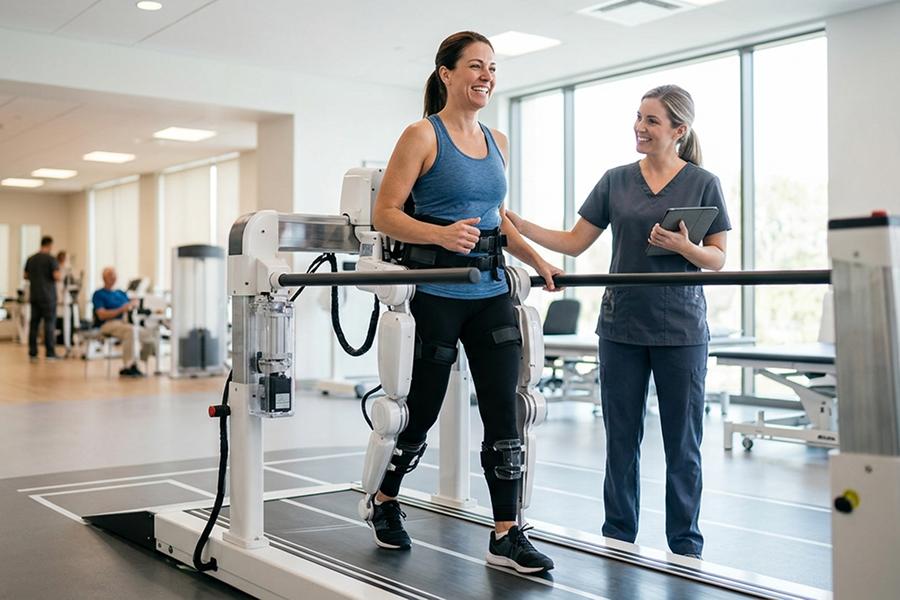
Robotic rehabilitation systems are designed to assist or guide particular movements during therapy. Some devices support walking practice, while others help patients perform repetitive upper-limb exercises.
These systems may be used in specialised rehabilitation settings for people recovering from neurological injuries, including stroke or brain injury, depending on their individual needs.
One potential advantage is the ability to deliver repeated movements with consistent mechanical assistance. Some systems also provide feedback that helps clinicians and patients review performance.
Nevertheless, robotic equipment is not suitable for everyone, and access may depend on clinical requirements, service availability, staffing, and cost. It should form part of an appropriate rehabilitation plan rather than be treated as a standalone solution.
4. Virtual Reality and Interactive Therapy
Virtual reality (VR) and interactive digital applications can introduce engaging activities into selected rehabilitation programs.
Depending on the system, patients may practise movements, complete guided tasks, or interact with simulated environments. These activities can help make certain exercises more engaging while providing feedback about performance.
Australian rehabilitation research has examined the implementation of advanced technologies, including virtual reality, robotic devices, sensors, and functional electrical stimulation. A 2024 study of a real-world rehabilitation setting highlighted both the potential of these technologies and the challenges involved in integrating them into routine clinical practice.
VR-based therapy still requires careful assessment. Factors such as balance, visual sensitivity, comfort, and the patient’s specific rehabilitation goals should be considered before a program begins.
5. Assistive Technology for Greater Independence
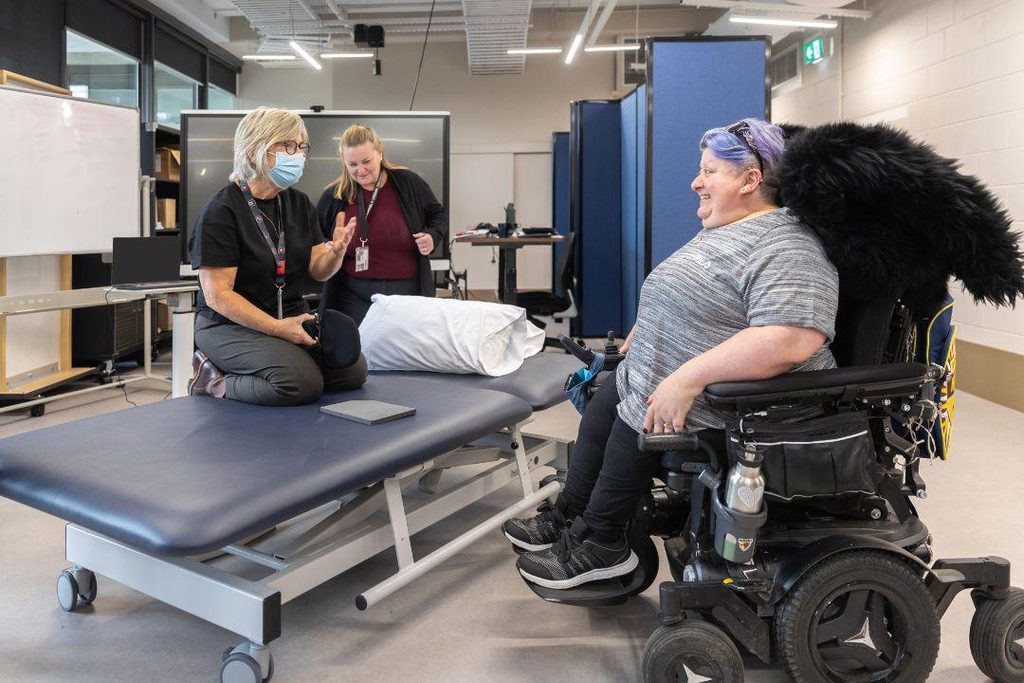
Not all recovery technology involves advanced software or robotic equipment. Many practical devices help people manage everyday activities more safely and independently.
Assistive technology can include specialised wheelchairs, seating systems, communication devices, adaptive equipment, and electronic controls designed to meet individual needs.
In Western Australia, the Rehabilitation Technology Unit within the East Metropolitan Health Service provides specialised services involving rehabilitation engineering, orthotics, prosthetics, and communication-related assistive technology. Its work includes helping people achieve functional independence and preparing for a safe return to the community.
These solutions can be particularly important for people living with long-term disabilities or experiencing significant changes in mobility and communication.
The right equipment depends on a person’s abilities, environment, and daily activities. Professional assessment helps ensure that the technology is appropriate and can be used safely.
The Role of Digital Health in Australia’s Allied Health Sector
Recovery technology is part of a broader effort to improve how healthcare information is collected, managed, and shared.
The Australian Digital Health Agency has developed the National Allied Health Digital Uplift Plan in collaboration with government and industry stakeholders. The initiative aims to strengthen digital capability and support more connected, coordinated, and person-centred care across allied health services.
Digital systems can support practitioners through electronic clinical records, secure information sharing, electronic prescribing where applicable, and better coordination between different parts of a patient’s healthcare team.
For example, a patient receiving physiotherapy, occupational therapy, and psychological support may benefit when relevant information is shared appropriately between providers. Better coordination can reduce unnecessary duplication and help professionals understand the broader context of a person’s recovery.
However, effective information sharing depends on privacy safeguards, secure systems, suitable software, and clear professional responsibilities. Technology should make care more coordinated without compromising the confidentiality of patient information.
Benefits and Challenges of Recovery Technology
Although technology offers promising opportunities, its effectiveness depends on how it is selected, implemented, and used in practice.
Major Benefits
- Greater accessibility: Telehealth and remote monitoring can help some patients access support without travelling long distances.
- More informed assessments: Digital measurements can provide additional information about movement, activity, and progress.
- Improved engagement: Interactive applications and reminders may encourage patients to participate consistently in their rehabilitation programs.
- Better coordination: Digital health systems can help practitioners communicate and share relevant information securely.
- Support for independence: Assistive devices can help people perform daily activities and participate more fully in their communities.
Challenges to Consider
Technology can also introduce practical difficulties. Advanced equipment may be expensive, while smaller clinics may lack the funding or training needed to implement it. Patients with limited digital skills, unreliable internet access, or disabilities that make devices difficult to operate may require additional support.
Evidence of effectiveness is another important consideration. Research on advanced rehabilitation technology has identified inconsistent adoption and challenges with sustained clinical use, highlighting the importance of staff training, implementation planning, and ongoing evaluation.
Healthcare providers should also assess privacy, cybersecurity, accessibility, maintenance requirements, and the quality of evidence supporting a particular device or system.
How to Choose the Right Recovery Technology
Selecting a suitable solution begins with understanding the patient’s needs rather than choosing the most advanced device available.
Consider these practical steps:
- Identify the rehabilitation goal. Determine whether the priority is improving mobility, supporting communication, restoring daily living skills, or making follow-up care more accessible.
- Consult a qualified allied health professional. A practitioner can assess suitability and recommend options based on the patient’s condition and functional abilities.
- Review the evidence. Consider whether reliable research supports the technology’s intended use and whether it is appropriate for the individual.
- Check accessibility and costs. Evaluate equipment expenses, software fees, maintenance, training, and any applicable funding arrangements.
- Monitor progress. Review whether the technology is helping achieve agreed goals and adjust the rehabilitation plan when necessary.
Patients should also ask how their information will be collected, stored, and shared. For technologies classified as medical devices, it may be appropriate to check relevant Australian regulatory requirements.
The most effective recovery plan combines suitable technology with professional assessment, practical support, and realistic expectations.
The Future of Australian Allied Health Recovery Technology
The future of rehabilitation in Australia will likely involve greater integration between digital health platforms, assistive equipment, and traditional allied health services.
Improvements in remote monitoring, artificial intelligence, wearable sensors, and interactive therapy may create additional ways to assess patient progress and deliver selected aspects of rehabilitation. However, the practical value of these developments will depend on clinical evidence, accessibility, affordability, and successful implementation.
National digital health initiatives also indicate a continuing focus on better-connected healthcare services and stronger digital capabilities across the allied health workforce.
For patients, the priority should remain straightforward: technology should help make recovery more accessible, appropriate, and responsive to individual needs. For practitioners, successful adoption will require training, careful evaluation, and a willingness to adapt workflows when evidence supports doing so.
Conclusion
Australian allied health recovery technology is an evolving area that combines rehabilitation equipment, digital health services, assistive devices, and technology-supported treatment approaches.
From telehealth consultations and wearable sensors to robotic rehabilitation and specialised communication equipment, these solutions can help qualified professionals support patients with a wide range of recovery needs.
Their value lies not in replacing human care, but in complementing clinical expertise, improving access where possible, and helping people work towards greater independence.
As Australia’s healthcare sector continues to develop its digital capabilities, the focus should remain on evidence-based practice, patient safety, privacy, and equitable access. By choosing suitable tools and integrating them thoughtfully into rehabilitation programs, allied health professionals can make technology a practical part of person-centred care.
Frequently Asked Questions (FAQs)
1. What is Australian allied health recovery technology?
It refers to digital systems, rehabilitation equipment, assistive devices, and technology-supported approaches used by allied health professionals in Australia to support recovery, improve function, and promote independence.
2. Which allied health professionals use recovery technology?
Physiotherapists, occupational therapists, speech pathologists, exercise physiologists, psychologists, and other allied health professionals may use technology appropriate to their discipline and patients’ needs.
3. Can technology help patients recover at home?
Yes. Depending on the condition and treatment plan, patients may use telehealth, digital exercise programs, monitoring devices, and assistive equipment at home under professional guidance.
4. Is robotic rehabilitation available in Australia?
Robotic rehabilitation technology is used in some specialised rehabilitation settings. Availability depends on the facility, equipment, clinical requirements, and the patient’s suitability.
5. Does recovery technology replace physiotherapists or other healthcare professionals?
No. Technology can support assessment and treatment, but qualified professionals remain essential for clinical judgment, individualised care, and monitoring patient safety.
6. How can Australians find suitable rehabilitation technology?
Start by consulting an appropriate allied health professional or rehabilitation service. They can assess individual needs and recommend suitable equipment, digital services, or assistive technology options.

I am Muhammad Jawad Iqbal (Founder & Admin of HacksNoon) from Lahore, Pakistan. HacksNoon is a technology blog covering AI, software, digital trends, and practical tech tutorials. I enjoy making technology easier to understand through useful, informative content.
Contact: info@hacksnoon.com